1,000-pound, GBU-32 Joint Direct Attack Munition (JDAM) weapons. (Trying to
remember, didn't this cause you folks some problems back in 2007 or there abouts?) Something about a DOUBLE ENGINE FLAME OUT?
A key new weapon for the Lockheed Martin F-22 Raptor has started a new series of tests despite a recent in-flight crash scare.
The Boeing GBU-39 Small Diameter Bomb (SDB) began separation tests on the F-22 in early September after more than a year of sometimes difficult work to integrate the weapon in the weapons bay and carry out airborne captive carry tests, Maj Jack Fischer, a USAF test pilot, told the Society of Experimental Test Pilots' annual convention.
Flight tests so far have produced a few in-flight problems, including one particular event that "could have been very bad", Fischer said.
In that incident, an F-22 suffered a brief, dual-engine flameout while performing a negative-g, 360 degree roll with eight SDBs loaded in the weapons bay. The flameout occurred because the aircraft entered the maneuver with an incorrect trim setting.
Although the engines restarted before the pilot was even aware of the problem, the momentary power loss dropped the telemetry signals to the control room on the ground.
The control staff lost contact "with the aircraft pointed down toward the water at a very low altitude", said Capt Harris Hall, a programme official. "For a time, we thought the aircraft was lost."
However, the engines were restarted almost immediately and the pilot remained in control of the aircraft, he said. The pilot landed at Edwards AFB, California, without incident. The dual-engine flameout was not discovered until flight engineers reviewed performance data from the flight.
Integrating the 250lb (113kg)-class SDB is key to making the F-22 a more effective air-to-ground weapons platform, displacing two 2,000lb Joint Direct Attack Munitions with eight, "extreme stand-off" guided bombs in the internal weapons bay, Fischer said.

The F-22 dominates any adversary through unmatched performance: stealth, supercruise speed, agility, precision and a complete view of the battlespace achieved with the advanced sensor suite embedded in the aircraft. Operational Raptors are assigned to the 1st Fighter Wing at Langley AFB, Va. (27th and 94th Fighter Squadrons) first aircraft are scheduled for delivery to the 3rd Wing at Elmendorf AFB, Alaska (90th Fighter Squadron) later in the summer of 2007. Future Raptor bases include Holloman AFB, N.M., and Hickam AFB, Hawaii.
The US Air Force goal is to fly 381 aircraft, but the current program, reflected by the Quadrennial Defense Review includes only 183 on contract. 105 Raptors have completed final assembly at the Lockheed Martin facility in Marietta, Ga. Deliveries to the Air Force total 99 F-22s so far. Raptors are delivered at a rate of approximately one every six weeks. On November 12, 2008 the Pentagon approved $40 funding for four additional aircraft, under a $140 million budget approved by the US Congress to fund long-lead material for 20 additional aircraft. Decision whether to release the remaining budget is expected after the new administration is established, in January or February 2009. According to Aviation Week, initial indications from the new administrations hint on continued support for the Raptor program. Anticipating a potential cut in the near term, the USAF could negotiate reducing the total procurement to 250-275 Raptors. The Air force considers offsetting the decrease in numers by reducing aircraft deployed with each squadron from 24 to 18, allowing the Air Force to sustain seven fighter squadrons.
Let's IMAGINE AND SUPPOSE for a moment that this F22 which is, or about to be fully capable of delivering a NUCLEAR PUNCH was up there doing a SHOW OFF FLIGHT when there was a PROBLEM, maybe a FREAKING DOUBLE FLAME OUT...who could that pilot communicate with if there was something going HORRIBLY WRONG? Did he even get a chance to send out one last I Love You to his family?
The US Air Force evaluated plans to expand the aircraft missions, with possible fielding of a modified and enhanced F-22ER version but at present, its top priority is to get as many 'A' Raptors it can, seeking to get as close as possible to its 381 aircraft goal. Therefore, the current Raptor fleet is expected to go through incremental upgrades rather than a model change, such upgrades will include the integration of a new communications (datalink) enabling greater information sharing between F-22s and other aircraft and combatant commanders (currently, Raptors can share information only among themselves). These datalinks could be based on future enhancements of the AESA radar, which are expected to include datalink waveforms. Other options include the integration of Link 16 (which was removed from the original suite few years ago) or installation of TTNT.
A high priority is the introduction of AIM-9X short range heat-seeking air-to-air missiles. Although the Raptor has provisions for two AIM-9X missiles carried in the side weapons bay, they were not integrated yet into the system, as the Raptor relies on six AMRAAM missiles used primarily for BVR kills. When the Sidewinders will be included, pilots may reconsider the use of helmet mounted cueing system (JHMCS) which hasn't been included in the current avionics suite.
Expanding the aircraft ground support role, future upgrades are planned for the AN/APG-77 AESA radar, including the addition of synthetic aperture radar (SAR) mode, introduction of electronic attack and geolocation improvements to support Global Positioning System (GPS) guided weapon retargeting. Among the new weapons to be introduced is the GBU-39/40 Small Diameter Bomb. Currently, the aircraft carries ordnance only inside the weapon's bay to preserve its stealth characteristics. However, the Raptor has hardpoints (two per wing) which are currently cleared only for external fuel tanks. These could be used for external weapons carriage. Operational testing of these upgrades is scheduled to start in 2009 with fielding beginning in 2010

Nuclear Reactor Waste...FORCED Community Hosting.
The US nuclear waste issue – solved
Nuclear energy is a must. Disposal is within our reach.
These two Biased Pro Nuclear HACKS should be ashamed of making such a misleading and dishonest statement. Talk about Nuclear Propaganda of the most unsavory kind! It sadly gets worse, as these two suggest Force Hosting of Commercial Nuclear Projects including WASTE DISPOSAL. Forcing nuclear genocide on a community for the convenience of the Nuclear Industry is not disposal within reach sirs.David S. Kosson
|  |
from the November 12, 2008 edition
Nashville, Tenn. - President-elect Barack Obama supports nuclear power to increase US energy independence and fight global warming (Actually, he said we needed to look at, and be able to SAFELY store the waste...forced HOSTING is out of the question.) – but only if a path to safe nuclear waste disposal is opened. Yucca mountain is out of the question, and communities such as mine are being cheated when the NRC wants to leave waste insitu on site at Reactor Sites such as Indian Point...tell me, how much do you and President Obama feel my wife's breast cancer is worth? Reactors are nuclear abortion machines...how many stillborn birth are acceptable in your mind for the convenience of nuclear energy? Fortunately, there is a two-step plan that can open that path and lead to an effective waste solution within eight years. And it embraces citizen consent. (ALARM BELLS FOLKS...NEI comes in, spreads some money around, spoon feeds a CHOSEN COMMUNITY their Pro Nuclear Propaganda and Pablum....sign right here. Here is a clue...every reactor community agree to host our current reactors for a period of FORTY YEARS. Now through NRC rubber stamping of License Renewal Applications, we are being RAPED, forced to host unsafe reactors for 20 more years in the name of a Nuclear Renaissance, in the name of NATIONAL SECURITY. )
In 1987, Congress cut off comparative site evaluations and closed all discussion of permanent nuclear waste locations except Yucca Mountain, in Nevada. It taxed nuclear utilities to pay for it, racking up $26 billion to date. NOT EXACTLY...actually, it is US THE CITIZENS through a monthly surcharge that have put together than $26 Billion. In fact, if a Class Action Attorney is interested, I have a group of citizens that want to SUE to get that money back since DOE has broken its contract with us.
The Energy Department did what Congress required: It studied Yucca and recently submitted an application to the Nuclear Regulatory Commission to approve site construction. FALSIFIED REPORTS AND STUDIES, and your teams still had to admit that YUCCA MOUNTAIN WILL NOT WORK FOR LONG TERM STORAGE.
However, few informed observers believe that the facility can be completed without the cooperation of Nevada, which is dead set against it. As they well should be. Be honest...you folks cannot even guarantee safe storage for 20 years...look at Dry Cask storage, and the supposed SAFE Spent Fuel Pools where the waste is at currently ARE ALL LEAKING. Critics perceive the site as too risky and as a threat to tourism. They would be right, but since you and yours depend on the NUCLEAR INDUSTRY for your meal tickets, you tout the PARTY LINE. Let you live within three miles of a reactor (Indian Point) that is leaking tritium, strontium 90 and other radioactive contaminants into the environment, let your wife get breast cancer, or give birth to a stillborn child, and then TELL ME HOW SAFE NUCLEAR IS. On top of that, Nevadans seem to feel that the federal government is unfairly pushing the facility on the state. Decades of complex administrative delays and judicial battles loom. AGAIN, they would be right. DOE wanted to form compacts for the long term storage of LLRW...or so they said. Their real plan was to get two, if they were luck three LLRW sites up and running under the Compact bait and switch, and then after the fact turn them into NATIONAL storage facilities...how do I know this? I found Secretary HAzel O'Leary's Senate Sub Committee Testimony that was used to kill the Midwest Compact back in the early nineties.
So, half a century after we started generating nuclear power, used nuclear fuel continues to accumulate at more than 100 temporary storage facilities near nuclear power plants. It's a daily reminder of the unfulfilled federal promise to own and begin moving the material by 1998. CLASS ACTION ATTORNEYS...take note...1998! TWENTY SIX BILLION...Pro Bono? Email Me strikeforcenews@aol.com
Much of the problem stems from an anachronistic policy enacted in 1982. The policy essentially stipulated that used fuel should be disposed of in a geologic repository as soon as one becomes available. But, if used fuel is allowed to sit in safe storage for 90 years, much of the heat and radioactivity decays away. This reduces the size, complexity, and cost of underground disposal. It also buys time. During the cool-down period, used fuel could be transformed from waste into a major source of energy if we can satisfy the tough engineering, cost, and security challenges involved in reprocessing it. FOLKS, DO NOT BE FOOLED.
1. This is the SAME BAIT AND SWITCH they did with Depleted Uranium from the Gaseous Diffusion plants. With the stroke of a pen they turned HUNDREDS OF THOUSANDS OF BARRELS of CANCER CAUSING Depleted Uranium WASTE into potential future use resources because some sick twisted scientist figured out you could create Armor Piercing Munitions with it...what he failed to tell you, what the government failed to tell you was we have enough of this Depleted Uranium to last us about 100,000 years...unless we all kill ourselves first.
2. The above paragraph is a SALES PITCH FOR GNEP...an unproven, untested theory of reprocessing of waste that will A) Make the United States the WASTE DUMP for all the world's radioactive waste streams, and B) leave waste sitting unsafely in host communities for CENTURIES under the guise it was NO LONGER WASTE, but a potential future use resource with a value attached thereof.
To reverse the current outdated policy, we need to set up four regional used-fuel storage facilities to act as transfer stations. THIS IS THE SAME SCAM they tried to use in selling communities on Low Level Radioactive Waste Facilities...I sat in on DOZENS of meetings, and trust me...if your community is chosen, they will write laws and statutes in such a way as to FORCE YOU INTO BEING HOST, just as they tried to do with the State of Ohio. These would provide geographic equity and allow relocation of the backlog of used fuel to locations where it can be stored safely, securely, and efficiently for up to 90 years before reprocessing or permanent disposal. Indian Point Spent Fuel was supposed to be GONE by 1998...we are now being told it could be sitting here WELL BEYOND 2060! Do you want to believe a Pro Nuclear sales pitch, or the voice of people that have LIVED THE NUCLEAR INDUSTRY LIES? This can be done with existing revenue and provides the time to implement the second part of the plan: developing and demonstrating an acceptable approach for permanent geologic disposal. TRANSLATED...Senator Reid is OLD, and things are always in flux in Washington DC...we just need time to get in some new faces, do some more heavy handed lobbying and elbow twisting.
The key to making interim storage work is to make informed consent, equity, and fair compensation the basis for temporary storage. One possibility is to use a "reverse auction" to enable prospective host communities to win regional support for the sites: Under the president's leadership, the federal government would allot, say, a billion dollars, and request bids from interested communities detailing how they would spend it to address the local impacts of and statewide concerns about the proposed facility. Large-tract federal sites would be especially attractive. For starters, lets make this RETRO-ACTIVE...we have 104 ACTIVE NUCLEAR REACTORS....ONE BILLION EACH for each of those reactors is $104 Billion.
A) $104 Billion is over TEN TIMES the entire amount of liability the Commercial Nuclear Industry has in the case of a significant accident or terrorist attack. Scary when the nuclear industry's own reports say a serious accident at a site such as Indian Point would quickly see damages in excess of HALF A TRILLION DOLLARS.
B) Lets show you just how DISRESPECTFUL of host communities these two assHOLES and the nuclear industry are. The industry wants us the tax payer to give them 100 percent loan guarantees for a reactor that is estimated to cost $10-15 Billion dollars each...keep in mind, that the last ten projects had 300 percent COST OVER RUNS, and that extra $30 Billion a reactor would be AUTOMATICALLY PICKED UP by tax payers. They want two build 200 of these reactors which is a TOTAL COST OF NINE TRILLION DOLLARS two thirds of that sum paid for with Federal Tax Payer dollars, the other $3trillion paid for with our taxes. But in their GENEROSITY, they want to make FOUR COMMUNITIES fight over and DIVIDE between themselves ONE BILLION DOLLARS...in short, about $250 million each, less than the $400 million AIG will pay out in Bonus money with our taxes.
If such compensation is combined with a program that includes local representatives in facility oversight, and that accurately informs citizens of the safety systems and the crucial national interests served (TRANSLATED...we will play on the patriotism of some small rural communities, and make sure you give them a really BIG FLAG at city hall!), many communities and states are likely to welcome these facilities.
At the same time, the US needs to continue locating permanent disposal sites that the nation will eventually need. Why will we need ALL THESE ADDITIONAL SITES? Because if you read GNEP, it makes the entire world's nuclear waste streams the responsibility of the United States of America. The search should be modified to ensure that the facilities are both safe and welcomed by the host community and state.
And then there's the safety question. The best way to gain public acceptance of a repository is to design it with multiple layers of protection, adopted through a deliberate, step-by-step process that uses pilot projects to test out the designs as the facility evolves. (WARNING...go reread that sentence folks....we will start them off small, get them USED TO BEING SLOWLY POISONED by building A SMALL TEST PROJECT...here is the HOOK THEY FUCK YOU WITH FOLKS....to test out the designs AS THE FACILITY EVOLVES! GET IT? They will hook you by making you think in you are just hosting a SMALL TEST PROJECT, but look at the truth of the SMALL PRINT.) The standards we adopt should be protective, achievable, and credible. Once again, potential hosts must be convinced that all decisions about repository implementation will be fully transparent and made with their concurrence. Speak to ANY CITIZEN that has ever sat through an NRC Kangaroo Court Public Meeting!...They listen to you, tell you exactly how they are going to screw you, then against your wishes they do EXACTLY WHAT IT IS THEY WANT TO DO. Call up the NRC as ask them how many Generic Letters are active right now...a generic letter excuses ALL LICENSEES from the rules meant to protect us the General Public.The eventual success of the Waste Isolation Pilot Plant near Carlsbad, N.M., which handles military radioactive waste was achieved in this fashion. The SAME PLANT up for a five year license renewal that the citizens DO NOT WANT, but which they are being told they will ACCEPT? That Waste Isolation Pilot Plant?
If Nevada decides it wants some part in this process, the current Yucca Mountain license application could be amended since there will be time for pilot demonstration steps, appropriate compensation, more flexible transportation options, etc. READ THIS FOLKS...its carefully crafted BRIBERY and BLACKMAIL all rolled into one sentence. What is crucial though, and I BRING THIS TO THE ATTENTION OF SENATOR REID...they admit they cannot MOVE FORWARD without a license amendment...WHY YOU ASK...because DOE cannot MEET THE TERMS REQUIRED for their CURRENT APPLICATION, and they DESPERATELY DO NOT WANT TO HAVE TO START ALL OVER. They will PAY YOU BLOOD MONEY for those Indian SACRED GROUNDS...come on REID, they are only FUCKING INDIANS...yes folks, this is the WAY THE MILITARY/COMMERCIAL NUCLEAR INDUSTRY THINKS!
A new independent federal commission should handle the overall siting process and a public corporation (akin to the Tennessee Valley Authority) designed specifically for operating new facilities. WARNING...WARNING...WARNING!!! TVA is the most despicable and dishonest Authority ever envisioned, a beast that CANNOT BE KILLED. All American citizens should be VERY AFRAID.
For national, economic, and environmental security reasons, it is now time for presidential leadership to embrace informed consent, fairer burden sharing, and appropriate compensation to meet this critical national energy need. PLEASE READ THIS SENTENCE AGAIN...now, let me paint it RAW AND UGLY...as I write this post the NEI, DOE, DOD and the Military/Commercial Industry are in NEGOTIATIONS, ARE LOBBYING for a PRESIDENTIAL EXECUTIVE ORDER THAT WILL TAKE AWAY YOUR SAY, WILL DE FACTO MAKE WHAT IS CONTAINED IN THIS ARTICLE HAPPEN.
• David S. Kosson and Charles W. Powers are professors of civil and environmental engineering at Vanderbilt University. They focus on development of multidisciplinary solutions to nuclear waste management issues.
Help Me Found Troops Home.org
Friday, March 27, 2009
Barack Obush Declares New War In Afghanistan

 ) we want our TROOPS HOME (http://www.troopshome.org/). I have just purchased these two domain names.
 Thursday, March 26, 2009
Black Ops Pilot Needlessly Dies In F-22 Crash
Wednesday, March 25, 2009 

FILE PHOTO: F-22 Raptor performs at the N'Awlins Air Show in Belle Chasse, La. One of the Air Force's F-22 fighter jets crashed March 25.
EDWARDS AIR FORCE BASE, Calif. — One of the Air Force's top-of-the-line F-22 fighter jets crashed Wednesday in the high desert of Southern California, killing a test pilot for prime contractor Lockheed Martin Corp.
The F-22A Raptor crashed at 10 a.m. about 35 miles northeast of Edwards Air Force Base in the Mojave Desert. The Bureau of Land Management identifies the area as Harper Dry Lake, a vast and empty expanse of sometimes marshy flat land.
This dry lakebed in the Mojave Desert was the site of secret flight test programs conducted by the Hughes & Northrop aircraft companies during the 1940s,including the historic first flight by an American rocket-propelled aircraft.
The pilot was David Cooley, 49, a 21-year Air Force veteran who joined Lockheed Martin in 2003, the company said in a statement. It did not release any details of the accident or say whether Cooley attempted to eject.
Cooley was part of a team of company and Air Force pilots who conduct F-22 testing.
"We are deeply saddened by the loss of David and our concerns, thoughts and prayers at this time are with his family," the statement said.
Sam Grizzle, a spokesman for Lockheed Martin Aeronautics Co., said no additional information would be released.
__________________________________________________________________________________________

I radioed the flight-test engineer in the control room at the Lockheed Flight Test ..... I don't know at what rate of descent I hit the ground; I went from so many .... Tony landed the twin Beech on Harper Dry Lake and taxied to a stop, ...
www.ejectionsite.com/yf104eject.htm - 32k - Similar pages
http://www.ejectionsite.com/yf104eject.htm
"The Harper Dry Lake site is close to Air Force Plant 42, the Palmdale development ... 60 miles from its Palmdale assembly area to the high-desert launch grounds. ... Testing of one of the VentureStar prototypes, the X-33 rocket plane, ...
articles.latimes.com/2000/apr/22/local/me-22326 - 39k - Similar pages
http://articles.latimes.com/2000/apr/22/local/me-22326
Northrop test pilots had more than their share of thrills and narroow escapes as .... ground tests of the rocket motor were conducted at Harper Dry Lake, ...
www.century-of-flight.net/Aviation%20history/fly... - 39k - Similar pages
http://www.century-of-flight.net/Aviation%20history/flying%20wings/northrop%20war.htm
The western Mojave, generally around Rogers Dry Lake and Harper Dry Lake exhibited .... The National Training Center and the Marine Corp Air Ground Combat Center ..... This test provided a way to determine which locations in the Mojave ...
linkinghub.elsevier.com/retrieve/pii/S0034425706004330 - Similar pages
http://linkinghub.elsevier.com/retrieve/pii/S0034425706004330
Mar 25, 2009 ... The Bureau of Land Management identifies the area as Harper Dry Lake, ... The jet, assigned to the 411th Flight Test Squadron of Edwards' 412th Test Wing, was on a test mission, said Air Force Maj. ... The warplanes can carry air-to-air missiles but are capable of ground attack as well. ...
wtop.com/index.php?nid=104&sid=1632942 - 6 hours ago - Similar pages
http://wtop.com/index.php?nid=104&sid=1632942
Feb 6, 2002 ... NASA Meatball, NASA Dryden Drone for Aeroelastic Structure Testing (DAST) banner ... and the DAST-2 crashed into a farm field near Harper Dry Lake. ... In case of failure in any of the ground systems, the DAST vehicle ...
www.dfrc.nasa.gov/gallery/Photo/DAST/HTML/ECN-20... - 18k - Similar pages
Edwards AFB

US AFFTC
Air Force Flight Test Center
The dry lake and the area to the east were first used by the military in late 1933 when a small detachment from March Field laid out the first of several temporary bombing and gunnery ranges. By 1937, the entire Army Air Corps was conducting bombing and gunnery maneuvers and a semipermanent tent camp had been established along the lakebed's eastern shoreline. Designated originally as the Muroc Bombing and Gunnery Range. and later as Muroc Army Air Field. The base played an important role in the training of fighter and bomber crews throughout World War II.

EL SEGUNDO, Calif., March 18, 2009 (GLOBE NEWSWIRE) -- Turkish Aerospace Industries, Inc. (TAI), a major international supplier to Northrop Grumman Corporation (NYSE:NOC) on the F-35 Lightning II aircraft program, has produced and delivered its first structural assemblies for the jet.
A photo accompanying this release is available at http://media.globenewswire.com/noc/
The metallic assemblies, which contain more than 100 parts each, represent the next major step forward in TAI's evolving role as a second source supplier of complete F-35 center fuselages. The company delivered its first F-35 composite parts in late 2008.
A: I think we have a long way to go before we can contemplate pulling out U.S. troops which are a fairly essential part of our Asian security structure right now.
Can I just finish up and say a word about my colleague Sam Grizzle. This is the last of many briefings for which he's helped me to prepare. As you probably know, Sam is, on Monday, starting in the low-pressure, short-hour job of General McCaffrey's spokesman at the National Drug Policy Office. Sam has been here since July of 1995. He has had extensive experience in the government to prepare him for his new job: worked at the Department of Energy before he came here, and he'd also, at one point, been a desk officer in DDI.
Sam is a Georgian, from Calhoun, Georgia. There must be a lot of dogs in Calhoun, Georgia, because Sam is always talking about dogs. He has phrases like, "That dog won't hunt no more," "If you can't run with the big dogs, stay on the porch," is one of his phrases. And another one is, "Unless you're the lead sled dog, the view's always the same."
Sam is about to become the lead sled dog in General McCaffrey's PA shop, and we wish him all the best there.
Declassification of Certain Characteristics of the United States Nuclear Weapon Stockpile U.S. Department of Energy
Office of Public Affairs
Contact: Sam Grizzle
(202) 586-5806
Retired Four Star General Barry McCaffrey Joins Mutualink
WASHINGTON — Today, Mutualink announced that former Drug Czar and retired four-star U.S. Army General Barry McCaffrey has joined Mutualink, Inc. as a key business advisor. General McCaffrey, and his consulting firm BR McCaffrey Associates, will be providing government relations, business strategy and business development advice to Mutualink’s Board of Directors and executive management team in order to assist the company in promoting the nationwide adoption of its novel and affordable interoperable multimedia communications sharing solution for nationwide emergency preparedness and response. Along with an outstanding record of military and public service achievements, McCaffrey brings to Mutualink in-depth knowledge and expertise in homeland security, defense and emergency management matters.
Monday, March 23, 2009
USS Hartford Nuclear Sub No Longer Seaworthy? Some Seem To Think So...
USS Hartford No Longer Sea Worthy? Formal Request For OPEN INVESTIGATION
Attn: Navy Hotline
Building 172
1254 Ninth Street, S.E.
Washington Navy Yard DC
Take Notice of the nice SMOOTH SEALED surface where the Sail joins the Hull.
Notice the vertical/horizontal alignments...compare this to the new CANT.
It does not take a rocket scientist to realize the horrific collision of the USS Hartford with the USS New Orleans was/is far more serious than the Navy is letting on. The few available pictures of the USS Hartford fast attack submarine show SERIOUSLY broken welds around the sail. The Conning Tower is canted from stem to stern, suggesting that periscopes are no longer working.
Vice Admiral William E. Gortney
Rear Admiral Thomas A. Cropper
Rear Admiral Scott E. Sanders
Rear Admiral Scott E. Sanders

Sunday, March 22, 2009
CNN's Smart Grid Story Not Quite Kosher
SMart Grid...Subject to Hackers, Or Not? That is The Question.
I am suggesting we take her story with a VERY LARGE GRAIN OF SALT...she does not report the WHOLE STORY, but instead calls her story complete because she sites TWO INDUSTRY EXPERTS in her story...two industry experts that STAND TO MAKE A LOT OF MONEY if they are successful in slowing Smart Grid down until they get a larger piece of the pie by adding on a lot more of their companies security programs. Her first expert, "Ed Skoudis, a co-founder of InGuardians, a network security research and consulting firm" warns against rolling out the system to fast. Her other source, IO Active warns of a MAJOR TAKE OVER OF THE SYSTEM with an investment of just $500...sort of kind of.
Not to cast dispersions on the reporter here, but WHAT IS IN IT FOR HER in using this two examples? There is a $4.5 Billion dollar pile of money on the table for Smart Grid, and neither of these two names came up on the front page when googling Smart Grid...but, there being in your article sure puts them FRONT AND CENTER. Tell us Jeanne Meserve, do you have any kind of a relationship/association with any of the sources in this article?
By Jeanne Meserve
CNN Homeland Security Correspondent
WASHINGTON (CNN) -- Is it really so smart to forge ahead with the high technology, digitally based electricity distribution and transmission system known as the "Smart Grid"? Tests have shown that a hacker can break into the system, and cybersecurity experts said a massive blackout could result.

If someone hacked into the Smart Grid, experts say it could cause a blackout that stretches across the country.
"I think we are putting the cart before the horse here to get this stuff rolled out very fast," said Ed Skoudis, a co-founder of InGuardians, a network security research and consulting firm.
The Smart Grid will use automated meters, two-way communications and advanced sensors to improve electricity efficiency and reliability. The nation's utilities have embraced the concept and are installing millions of automated meters on homes across the country, the first phase in Smart Grid's deployment. President Obama has championed Smart Grid, and the recent stimulus bill allocated $4.5 billion for the high-tech program.
But cybersecurity experts said some types of meters can be hacked, as can other points in the Smart Grid's communications systems. IOActive, a professional security services firm, determined that an attacker with $500 of equipment and materials and a background in electronics and software engineering could "take command and control of the [advanced meter infrastructure] allowing for the en masse manipulation of service to homes and businesses."
United States Nuclear Navy HIDING SIGNIFICANT DAMAGE from Nuclear Sub/Ship Accident in Straight of Hormuz
 A cursory Google Search, and a check of the Fifth Fleets Bahrain Web Site makes it abundantly clear that the Navy and its Nuclear Submarine people are DESPARATELY trying to keep the world from knowing just how much damage was done to the USS New Orleans and the Submarine, the USS Hartford. Two pictures (supposedly the USS New Orleans) are very obvious PROPAGANDA PIECES meant to present a BUSINESS AS USUAL, nothing is wrong appearance to the citizens of America. Oddly, the Fifth Fleet released NO PICTURES of the USS Hartford Fast Attack Nuclear Sub docking, or coming into port. It is this author's belief that the submarine's mast has suffered SIGNIFICANT damage. In other news...the old no harm no foul, we saw no DIESEL FUEL excuse has also been trotted out...that's right Commander Propaganda, 25,000 gallons of diesel just VANISHED! Where does a citizen file a complaint at? Do not believe that NUCLEAR REACTOR was not damaged until Congress conducts a FULL AND COMPLETE INDEPENDENT investigation...if the USS Hartford was NOT SIGNIFICANTLY DAMAGED, where are the photographs?
Well Well Well...HIDDEN on a MARINE website, a picture of the DAMAGE, or at least a TARP (as in Wall Street) covering the NAVAL NUCLEAR MISTAKE!
Hartford suffered “visible” damage to the sail and to a bow plane. Campbell could not say if components of the sail such as masts and periscopes are damaged.
“It’s important to point out that Hartford’s [nuclear] power plant was not affected in this at all,” she said. “We’ll be doing a full incident investigation report as well as a [Judge Advocate General’s Manual] investigation.” No DAMAGE, LET IAEA do independent verification. How about Union of Concerned Scientist? Mother's For Peace? By the way, isn't this the THIRD SUCH COLLISION RECENTLY? Yet no ADMIRALS have tenured their resignations out of SHAME?
This is third recent collision involving a U.S. submarine in the Strait of Hormuz or the Persian Gulf.
March 21, 2009
FOR IMMEDIATE RELEASE
Release #049-09
USS Hartford and USS New Orleans Arrive In Port Bahrain
MANAMA, Bahrain – The U.S. Navy submarine and U.S. amphibious ship that collided in the Strait of Hormuz March 20, arrived in port Bahrain today.
USS Hartford (SSN 768) and USS New Orleans (LPD 18) arrived at Mina Salman pier to further assess and evaluate the damage that resulted from their collision at sea.
The incident remains under investigation.
Overall damage to both ships is being evaluated. The propulsion plant of the submarine was unaffected by this collision. New Orleans suffered a ruptured fuel tank, which resulted in a fuel spill of approximately 25,000 gallons of diesel fuel marine in the Strait of Hormuz.
Aerial searches of the area where the fuel spill occurred were conducted yesterday, and revealed no indication of any remaining fuel on the ocean’s surface.
The U.S. 5th Fleet has been working in coordination with the Navy Oceanographic Office to determine refined search areas, based on currents and winds. Additional searches were flown by U.S. Navy aircraft today and found no remaining fuel on the surface.
The quick dissipation of the fuel is likely due to the type of fuel, and various environmental factors to include air and water temperatures, winds and seas.
Both Hartford and New Orleans are currently on regularly scheduled deployments to the U.S. 5th Fleet area of operations conducting Maritime Security Operations (MSO).
MSO set the conditions for security and stability in the maritime environment as well as complement the counter-terrorism and security efforts of regional nations. MSO deny international terrorists use of the maritime environment as a venue for attack or to transport personnel, weapons, or other material.
 USS New Orleans Arrives in Bahrain
 USS New Orleans Arrives in Bahrain
 090321-N-8053S-130 BAHRAIN (March 21, 2009) USS New Orleans (LPD 18) pulls into Mina Salman pier in Bahrain to asses and evaluate damage that resulted from a collision with the submarine, USS Hartford (SSN 768) in the Strait of Hormuz. No personnel aboard New Orleans were injured in the incident. Overall damage to both ships is being evaluated. New Orleans is deployed to the U.S. 5th fleet area of operations to support Maritime Security Operations. (U.S. Navy photo by Mass Communication Specialist 2nd Class David K. Simmons / Released)

090321-N-8053S-165 BAHRAIN (March 21, 2009) USS New Orleans (LPD 18) lowers the ships’ brow after mooring pierside in Bahrain where U.S. Navy engineers and inspection teams will asses and evaluate damage that resulted from a collision with the amphibious ship, USS Hartford (SSN 768) in the Strait of Hormuz. No personnel aboard New Orleans were injured in the incident. Overall damage to both ships is being evaluated. New Orleans is deployed to the U.S. 5th fleet area of operations to support Maritime Security Operations. (U.S. Navy photo by Mass Communication Specialist 2nd Class David K. Simmons / Released)
http://www.cusnc.navy.mil/photos/hi/090321-N-8053S-165.jpg
THE TENSION: USS Hartford and USS New Orleans Arrive in Port...
Mar 21, 2009 ... BAHRAIN (March 21, 2009) USS New Orleans (LPD 18) pulls into Mina Salman pier in Bahrain where U.S. Navy engineers and inspection teams will ...
thetension.blogspot.com/2009/03/uss-hartford-... - 8 hours ago
Saturday, March 21, 2009
Dealing With Reactor Site Employee Sleep Depravation Issues
Program Manager: Dr. Amy Kruse
 Sleep deprivation is a fact of modern combat. Current operations depend upon the warfighter’s ability to function for extended periods of time without adequate sleep. The widespread operational demand for optimal performance in sleep-depriving conditions demonstrates the necessity for development of methods to safely combat sleep deprivation and to prevent the associated degradation of performance.
The goal of the Preventing Sleep Deprivation Program is to define and implement approaches to prevent the harmful effects of sleep deprivation, and to provide methods for recovery of function with particular emphasis on cognitive and psychomotor impairments. Among the approaches currently under investigation include novel pharmaceuticals that enhance neural transmission, nutraceuticals that promote neurogenesis, cognitive training, and devices such as transcranial magnetic stimulation. The approaches discovered in this program will greatly increase our soldiers’ ability to function more safely and effectively despite the prolonged wakefulness inherent in current operations.
http://www.dailygalaxy.com/my_weblog/2008/01/darpa-develops.html
DARPA Develops Brain Chemical to Replace Sleep
 As the line between science fiction and reality becomes increasingly blurry, the Defense Advanced Research Projects Agency (DARPA) has always led the pack in terms of cool, weird, wacky and frightening innovations. This time Darpa-funded scientists have found a drug that eliminates sleepiness with a nasal spray of a key brain hormone. The spray has worked well in lab experiments, with no apparent side effects. The hope is that the hormone will serve as a promising sleep-replacement drug in humans.
The spray contains a naturally occurring brain hormone called orexin A. In tests, monkeys suffering from sleep deprivation were treated with the substance and were subsequently able to perform like well-rested monkeys on cognitive tests. Darpa is no doubt interested in the spray for it’s promise of keeping soldiers awake and alert during battle, but for those suffering from narcolepsy, the discovery may offers a potential treatment. Even those with less severe sleep disorders may be interested. According to the National Sleep Foundation, than 70 percent of Americans get less than the generally recommended eight hours of sleep per night and consequently suffer some type of sleep-deprivation symptoms.
DARPA Sets Tone for Technological Superiority
December 2006
By Lawrence P. Farrell Jr.

Deputy Defense Secretary Gordon England at a recent conference in the nation’s capital noted that the greatest long-term threat to America is not weapons of mass destruction, but rather the prospect of losing our strength in science and technology.
England’s observations are quite sobering, and remind us of the important role that science and technology play in the military superiority of our armed forces. Although technology is just one of a triad of key elements that are needed to maintain our edge on the battlefield — quality people is the primary component, in addition to first-class training.
Technology is America’s great strength and one that we cannot afford to lose. In this context, it is fitting to highlight the important contributions that the Defense Department makes to the nation in this critical realm. In fiscal year 2007, defense S&T remains fairly robust at $13.3 billion — this includes programs in basic research (6.1) and applied research (6.2 and 6.3). One issue of concern, however, is that S&T is only 17 percent of the entire defense RDT&E (research, development, testing and evaluation) budget. That 17 percent share is expected to decline.
The biggest share of the defense S&T budget — $3 billion — belongs to the Defense Advanced Research Projects Agency.
DARPA truly is on the leading edge of technology, and provides a winning model for how the government can achieve genuine innovation that also helps us win wars.
PRIMER-OPSEC (Operational Security) For Stake Holder Communities
 | Protecting Sensitive |
Protecting Sensitive Unclassified Information
Overview
The term sensitive unclassified information as used here is an informal designation applicable to all those types and forms of information that, by law or regulation, require some form of protection but are outside the formal system for classifying national security information.1 As a general rule, all such information may be exempt from release to the public under the Freedom of Information Act. This module reviews the most common types of sensitive unclassified information.2 Again, this is a designation being used far to frequently just because certain people want the general public kept in the dark...Transparancy is a good thing.
Department of Defense also uses the term Controlled Unclassified Information (CUI) to refer to certain types of sensitive information within DoD that require controls and protective measures. CUI includes For Official Use Only and information with comparable designations that is received from other agencies, DoD Unclassified Controlled Nuclear Information, "Sensitive Information" as defined in the Computer Security Act of 1987, and DoD technical data.3
Some information that is not formally designated as sensitive is nonetheless inappropriate for putting on a public Internet site. This is discussed in Pre-Publication Review of Public Web Site Content.
Most categories of sensitive unclassified information are defined by federal law, while others such as For Official Use Only are defined by organization policy and some government organizations use different names for this category of information. Most legislative authorities are very specific in identifying the protected category of information, while others are general and leave much discretion to the agency or company.
Procedures for safeguarding sensitive unclassified information depend upon the category of information and, in some cases, vary from one agency or company to another.
Personal Conduct and
Reporting Requirements
Standards of Personal Conduct
What is expected of me? Examples of behavior of potential security concern. Guidelines for adjudicating security clearances.
Self-Reporting on Your Personal Activities
Reporting foreign contacts, foreign travel, intent to marry or cohabitate, financial and substance abuse issues, certain outside activities, etc. Pre-publication review. Reporting foreign intelligence activities.
Reporting Improper, Unreliable, or Suspicious Behavior
Reporting responsibilities. Counterintelligence indicators. Security and suitability issues. Preventing violence. No good excuses for not reporting. Examples of how people like you made a difference. Hot line phone numbers.
U.S. Government Ethics Standards
Gifts. Frequent Flyer Benefits. Impartiality. Misuse of Position. Financial Interests. Outside Activities. Post-Employment Limitations.
Foreign Threats
To Protected Information
Who's Doing What to Whom?
Economic collection and industrial espionage. Illegal technology transfer. Computer crime. National Security Threat List. Militarily Critical Technologies List. Economic Espionage Act of 1996.
How Do I Know When I'm Being Targeted and Assessed?
Recognizing the spotting - assessment - recruitment process used by all intelligence services. Who is most likely to be targeted.
Getting Information Out of Honest People Like Me
Elicitation. Unsolicited requests. False pretenses. Short-term foreign visitors. Long-term foreign visitors. Joint ventures/foreign acquisitions. Open source collection. Theft and dumpster diving.
Risks During Foreign Travel
Country threat updates. Security and safety recommendations. Avoiding/recognizing intelligence interest. Contact with foreign relatives. Vulnerability to theft, bugging, communications intercept. Reporting security incidents. What to do if arrested.
Antiterrorism and Force Protection
Living and traveling outside the U.S. Defensive driving overseas. Package and letter bombs. Kidnapping and hostage survival guidelines. Hijacking survival guidelines. DOD Code of Conduct.
Computer and Other
Technical Vulnerabilities
Computer Vulnerabilities
Threats to computer security, how hackers work, and how we unintentionally make it easy for them. Passwords, "social engineering," case studies, using the Internet securely, e-mail, viruses, security of hard drives, theft of laptop computers.
Intercepting Your Communications
Telephones, fax machines, cell phones, cordless phones, answering machines, voice mail, intercoms and baby monitors, countermeasures.
Bugs and Other Eavesdropping Devices
Eavesdropping threat. Methods of eavesdropping. Detecting and Preventing Eavesdropping.

| Reporting Responsibilities No Good Excuses for Not Reporting | |
| Counterintelligence Indicators People Who Made a Difference | |
| Security and Suitability Issues | |
| Preventing Violence Hotline Numbers |

Reporting Responsibilities
If you are entrusted with safeguarding classified material, you are expected to report potentially significant, factual information that comes to your attention and that raises potential security concerns about a co-worker. You are also strongly encouraged to help co-workers who are having personal problems that may become a security issue if the problems are not addressed.
Presidential Executive Order 12968 on "Access to Classified Information" states: "Employees are encouraged and expected to report any information that raises doubts as to whether another employee's continued eligibility for access to classified information is clearly consistent with the national security." It states further that the head of each agency that grants access to classified information shall establish a program to educate employees with access to classified information about their individual responsibilities under this order.1 This security guide meets that requirement.
The information presented under Counterintelligence Indicators, Security and Suitability Issues, Preventing Violence, and Suicide Crisis Intervention is background information to help you judge whether a co-worker’s behavior raises concerns that merit reporting to an appropriate authority.
Related Topics: Exploring the Mind of the Spy, Treason 101, Spy Stories
Reference
1. Director of Central Intelligence Directive 6/4 also imposes an "obligation to report to proper authorities any information which could reflect on the trustworthiness of an individual who has access to SCI."
 | Treason 101 Treason 101 |
| Overview Insider Threat to Information Systems Exploring the Mind of the Spy | |
| How Spies Are Caught | |
The Insider Espionage Threat It is noted here, that the NRC wrongfully removed this as a threat in their DBT. |

Overview
Your short course in Treason is a series of articles on how spies are caught, the prevalence of espionage, and why people spy.
It starts with a short piece on How Spies Are Caught. That comes first, as it is so important for anyone who may be considering espionage to understand that they WILL be caught. Perhaps not right away, but eventually. The statute of limitations does not apply to the crime of espionage. Anyone who commits this crime will have to be looking over their shoulder for the rest of their life.
The Insider Espionage Threat identifies four conditions that must exist before espionage occurs – opportunity to commit the crime; motive; ability to overcome inhibitions such as moral values, fear of being caught, and loyalty to employer or co-workers; and a trigger that sets the betrayal in motion. The article then analyzes how these pre-conditions for betrayal are increasing as a result of changes in social and economic conditions in the United States, and in our relations with the rest of the world.
Explosive growth in information technology is increasing exponentially the amount of information that can be collected and compromised by a single, well-placed spy. Insider Threat to Information Systems examines some of the unique security issues associated with computer professionals.
Exploring the Mind of the Spy discusses what psychologists have learned by interviewing and testing arrested and convicted American spies. Motivations for espionage are far more complex than commonly believed. Selling secrets is usually the last act of a long-simmering emotional crisis. In many cases, the symptoms of this crisis have been observable, identifiable, and even treatable before the damage was done. Typically, however, the potential significance of the "at-risk" behavior has not been recognized or reported at the time by coworkers or supervisors.
Espionage by the Numbers describes an unclassified database on all Americans arrested for espionage since the start of the Cold War. Based on media reports, trial records and unclassified official documents, the data base records information characteristics of the spies, characteristics of the espionage activity, and prevalence among the spies of several behaviors that are commonly associated with security risk.
Counterintelligence IndicatorsCounterintelligence indicators are signs that an individual may already be involved in espionage or other improper use of classified information. The record of past espionage cases shows that co-workers and supervisors often overlooked or failed to report counterintelligence indicators which, had they been reported, would have permitted earlier detection of the spy. Some of the following indicators are clear evidence of improper behavior. Others may well have an innocent explanation but are sufficiently noteworthy that your security office should be informed. If you become aware that any of the following indicators apply to one of your co-workers, you are expected to report this information directly to your security office or a counterintelligence office, or by calling any one of the Hotline Numbers that various organizations have set up for this purpose. The security office will evaluate the information in the context of all other information known about the individual. Depending upon the circumstances, action may range from simply making a note in the individual's security file to conducting a discrete investigation. If your reporting helps stop a case of espionage, you may be eligible for a reward of up to $500,000. The reward is authorized by an amendment to Title 18, U.S.C., Section 3071, which authorizes the Attorney General to make payment for information on espionage activity in any country which leads to the arrest and conviction of any person(s):
Reportable Indicators
|

|

- Taking classified materials home or on trips, purportedly for work reasons, without proper authorization.
- Working odd hours when others are not in the office without a logical reason, or visiting work areas after normal hours for no logical reason.
- Bringing cameras or recording devices, without approval, into areas storing classified or other protected material.
 Potential Indicators of Information Transmittal
- Storing classified material at home or any other unauthorized place.
- Short trips to foreign countries, or within the U.S. to cities with foreign diplomatic facilities, for unusual or unexplained reasons, or that are inconsistent with one’s apparent interests and financial means.
- Excessive and/or unexplained use of e-mail or fax.
- Failure to comply with regulations for reporting foreign contacts or foreign travel. Any attempt to conceal foreign travel or to conceal close and continuing contact with a foreigner, particularly a foreign official.
- Foreign travel not reflected in the individual’s passport to countries where entries would normally be stamped.
- Maintaining ongoing personal contact, without prior approval, with diplomatic or other representatives from countries with which one has ethnic, religious, cultural or other emotional ties or obligations, or with employees of competing companies in those countries.
Potential Indicators of Illegal Income
- Unexplained affluence, or life-style inconsistent with known income. Includes sudden purchase of high-value items or unusually frequent personal travel which appears to be beyond known income. Sudden repayment of large debts or loans, indicating sudden reversal of financial difficulties.
- Joking or bragging about working for a foreign intelligence service, or having a mysterious source of income.
Other Potential Indicators
- Behavior indicating concern that one is being investigated or watched, such as actions to detect physical surveillance, searching for listening devices or cameras, and leaving "traps" to detect search of the individual’s work area or home.
- Any part-time employment or other outside activity that may create a conflict of interest with one's obligation to protect classified or other sensitive information, and that has not been approved by the security office.
- Attempt to conceal any activity covered by one of these counterintelligence indicators.
Troops Home.org

Donations NOT Tax Deductible
A Green Revolution

Doing More With Less
Nuclear Snap Shots

Legalize Pot

Grow Your Own Party
DOD Dictionary
Click Pic
Black Box OPS

Opening Pandora's Box
Nuclear Reactor Accidents

Good For First Responders Good For The Economy Outside of the Exclusion Zone.
Chernobyl

Will Happen Again

Richard M. Nixon-National Energy Policy Speech 11/25/1973

"What I have called Project Independence is...set to insure that by the end of this decade, Americans will not have to rely on any source of energy beyond our own."

Is President Obama

A Black Bigot

Albert Einstein Said

" If you succeed in using the nuclear-physical findings for peaceful purposes, it will open the way to a new paradise." Over 50 years after introduction of the peaceful atom, turns out he was wrong.



Helen Keller Brain Salad Sandwich
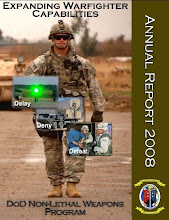
DOD Non Lethal Weapons...the 2008 annual report on how the DOD, Secret Service and DHS will perform mass Labotomies.

Rock The Reactors

Your Host Remy C
Indian Point Disaster

A Peek At Tomorrow
Our Nuclear PORTAL

The Indigo Nuclear Connection
National Archives

Naked Intelligence

Crystal Meth Dreams

Energy Source Links

Nuclear Links

Graveyard
Nuclear Scum on Parade

Commercial Nuclear

Is Military Nuclear
More Nuclear Threads

Keep Pulling
